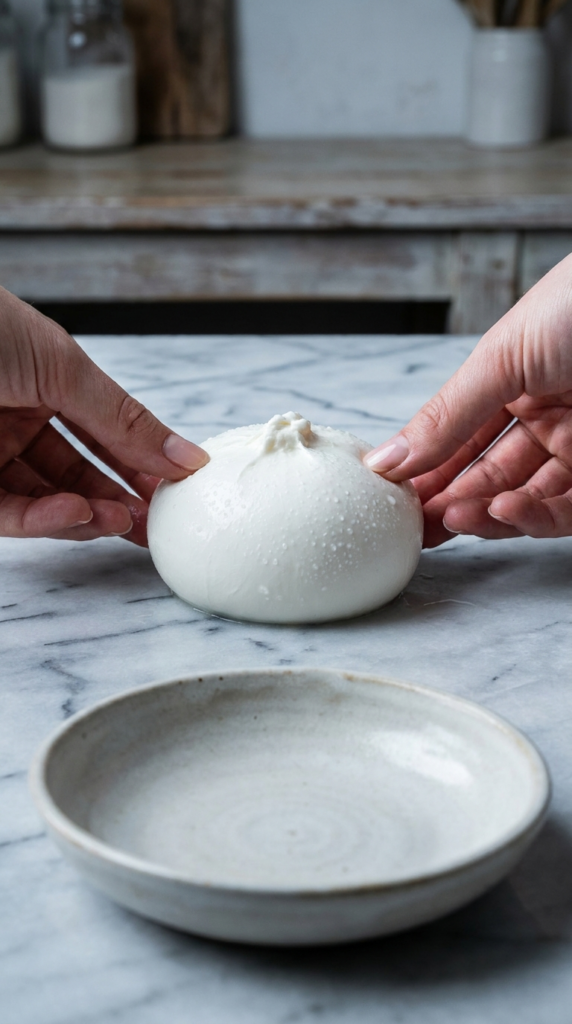
The feta arrives at the table still cool from the cold case, a dense block of white that catches the light like marble. When fingers press into its edge, it doesn't yield gracefully—it fractures, shatters almost, into crystalline fragments that scatter across the plate in a cascade of irregular shards. Each piece is different: some retain the faint tang of the brine it was packed in, others are drier, more crumbly, their salt intensity concentrated in the smallest grains. The cheese is cold enough that it numbs the tongue slightly on first contact, a deliberate shock that makes the salty-sour notes hit harder and faster. There's a mineral quality to it, almost chalky, but underneath runs a creamy thickness that coats the mouth and doesn't dissipate quickly.
This is the cheese of long afternoons, of simple plates shared in kitchens where generations have sat. It belongs alongside tomatoes gone soft in the sun, black olives, torn bread still warm from the baker. The aromas rising from the crumbled block are sharp and clean—tangy, slightly funky, carrying the memory of milk and salt and time. The scattered fragments catch on lettuce leaves, settle into the corners of the plate, white against green. One piece dissolves almost immediately on the tongue, releasing its full salted weight all at once. The second bite is deliberately different—the eater chases the larger shards, where the texture becomes almost grainy, where cold and salt and fat align into something that demands more bread, more wine, more of this simple, ancient thing.