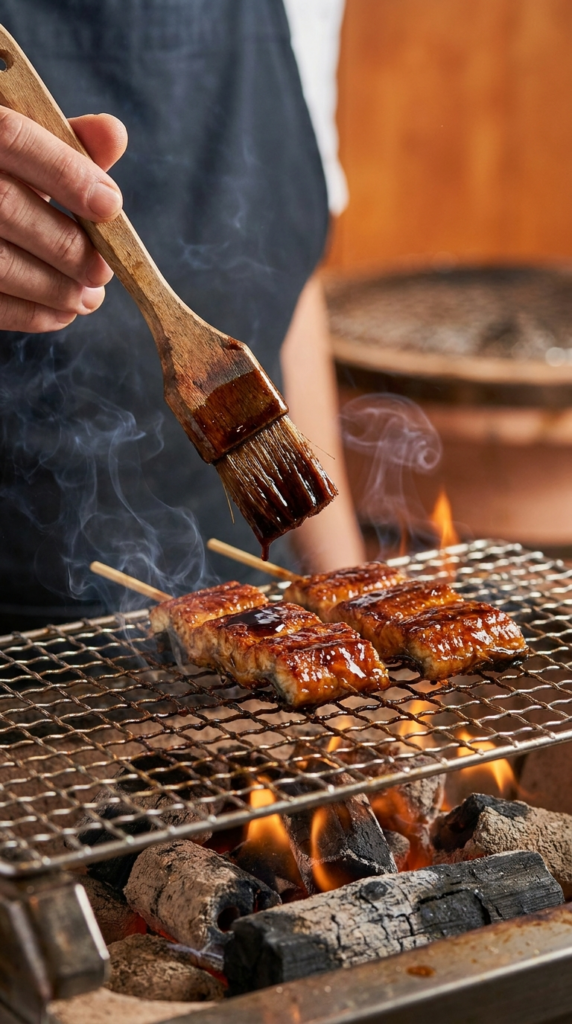
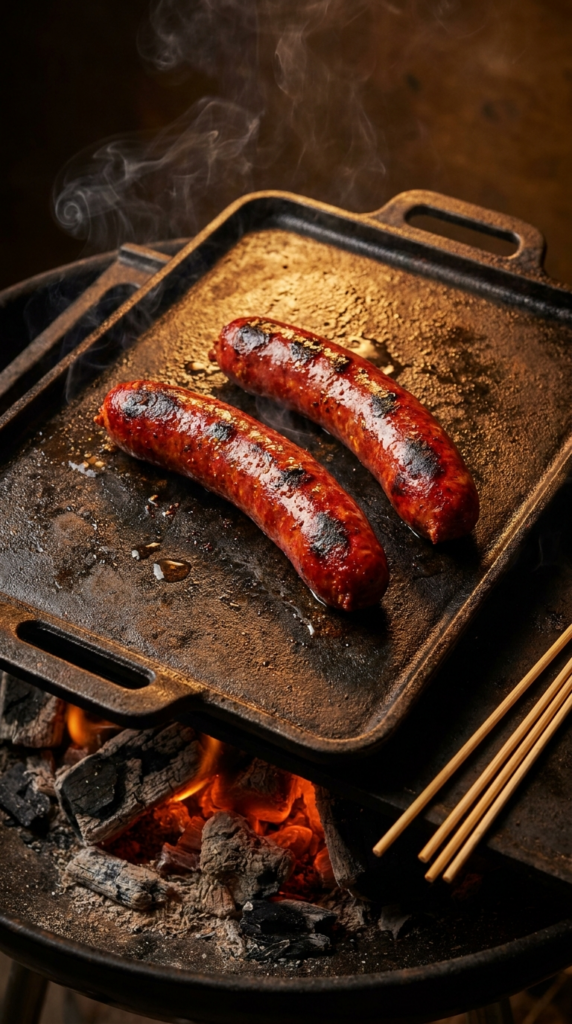
A braai steak arrives at the table still singing, its surface a burnished mahogany crust that catches the light like lacquered wood. The fat has rendered to translucence at the edges, pooling in amber streaks across the meat's face. When the knife breaks through, there is resistance—the satisfying give of a properly seared exterior—before the blade slides into flesh that has been kissed by smoke and held over coals until the inside stays tender, almost blushing pink. The first bite carries heat still, a warmth that travels down the throat, and the smoke taste is not overwhelming but present, threaded through like a memory that lingers. Salt sits on the surface, catching on the tongue before dissolving into the meat's own mineral richness.
This is the meal of generations, the gathering that requires no invitation because it is understood. Braai belongs to the late afternoon, to the moment when work stops and the light turns gold, when families and neighbors congregate around the fire without agenda beyond the primal act of feeding. It tastes of belonging, of continuity, of the kind of hunger that is never purely physical. The meat cools slightly as it sits, the crust firming, the smoke's grip loosening just enough to let the beef's own depth emerge—iron and fat and the particular mineral sweetness of grass-fed muscle. Each subsequent bite is slightly cooler, slightly richer, the flavors accumulating on the palate like sediment, building toward something complete and necessary and entirely sufficient.