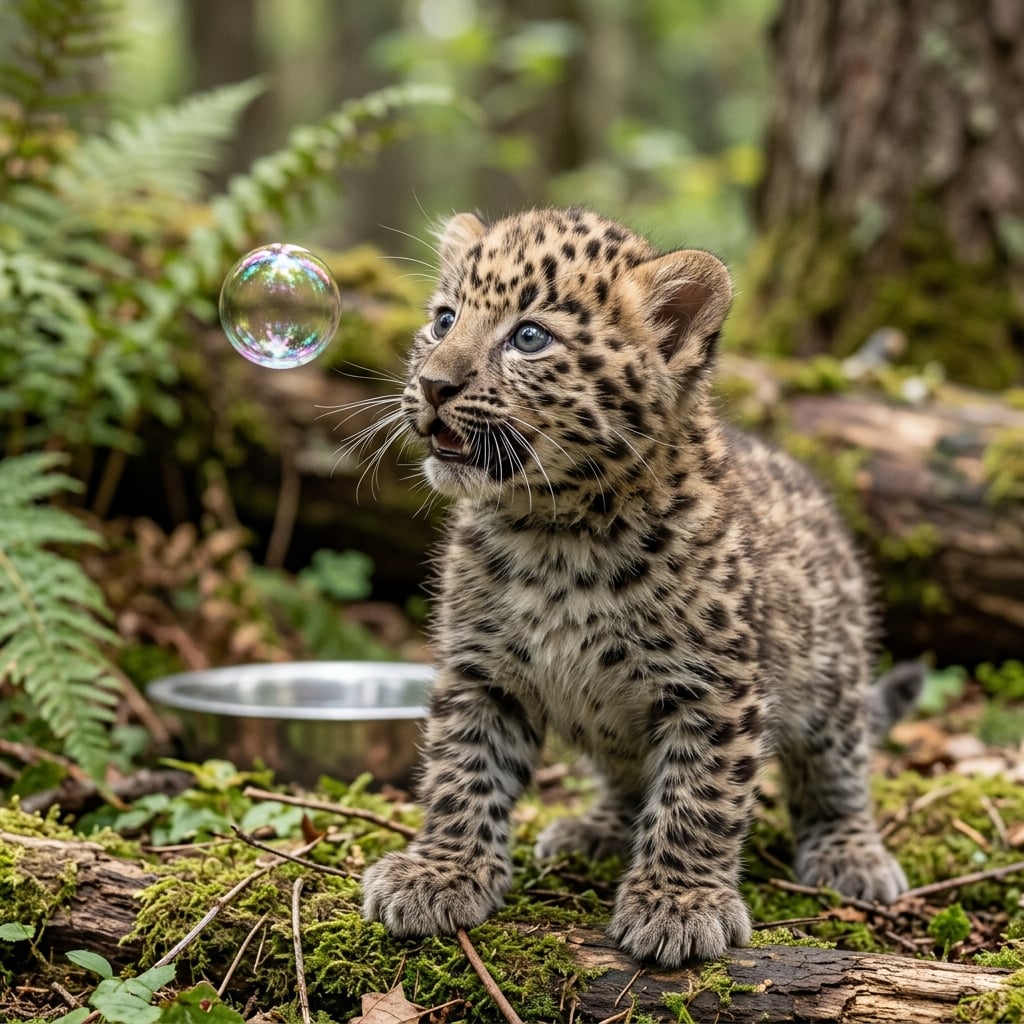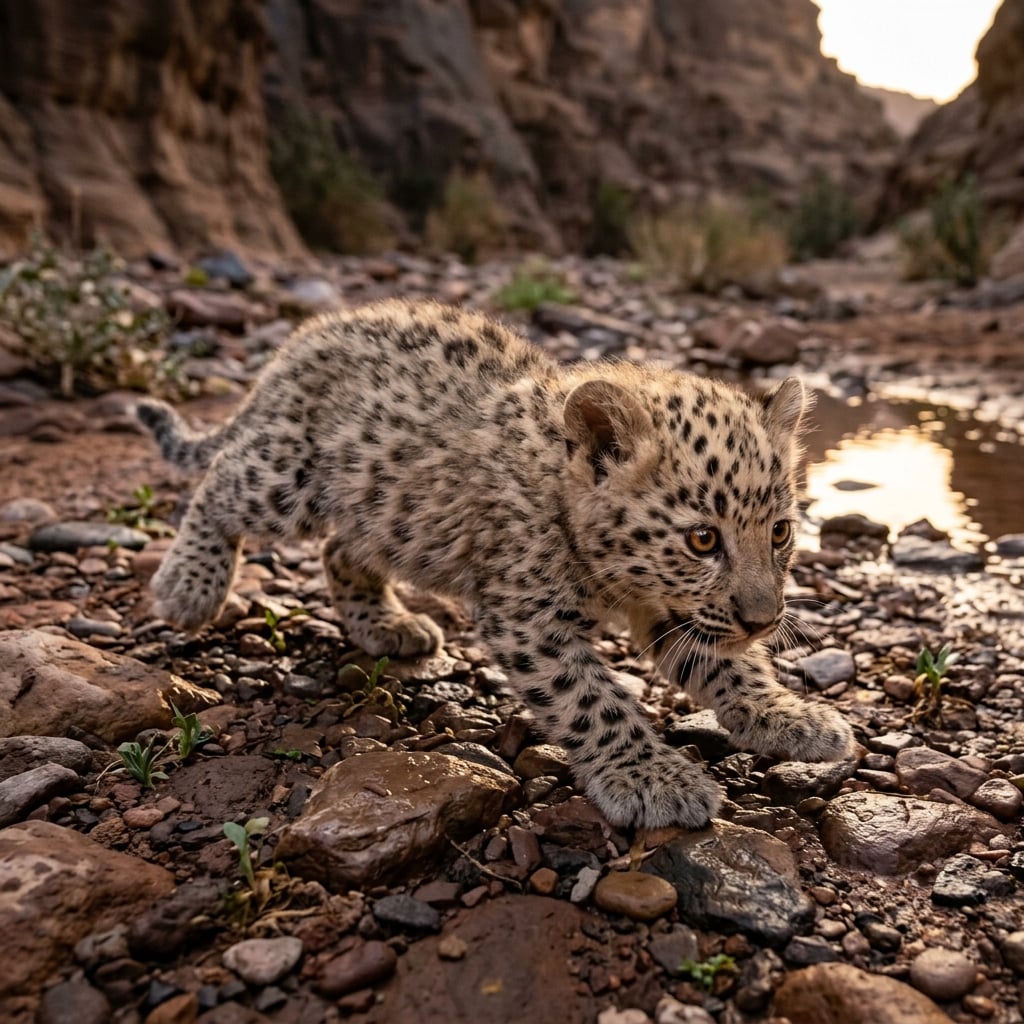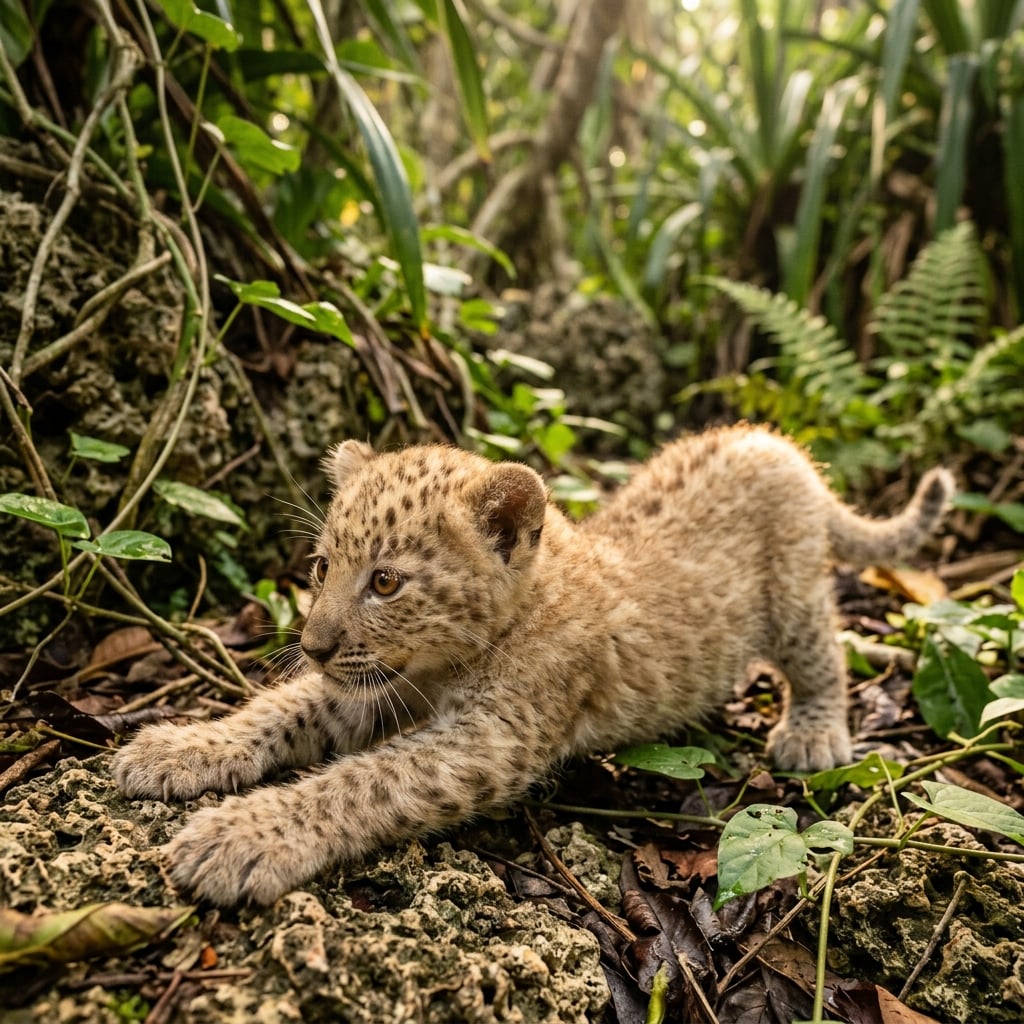
When a leopard cub is born, it’s small enough to disappear into dense shelter, with its eyes closed and its body largely focused on staying warm. At this newborn stage, fur may look soft and slightly rumpled, and the beginnings of the leopard’s spotted coat are often visible as faint patterns. Those oversized paws—so bold in the moment—are built for climbing and balance long before the cub can confidently move on its own. In these earliest days, the world comes to the cub through touch and smell. The mother stays close, bringing the cub warmth and responding to faint sounds. The cub’s posture changes gradually: it nudges forward when it’s time to nurse, stretches toward familiar signals, and learns the rhythm of feeding. Even before the eyes fully open, the cub can sense the presence of its mother through subtle vibrations and scent. Around the time the eyes begin to open—often roughly a week to ten days—the cub’s focus is still blurry, but curiosity replaces pure helplessness. The cub may start to roll, creep, and test its strength with short, determined movements. Hearing develops too, helping it notice when the mother shifts nearby. Siblings, if there are any, typically lie close enough for their warmth to mingle, turning the den into a small, safe pocket of life. As the cub grows into the very young stage, milestones follow in a natural order: clearer sight, stronger crawling, and eventually standing and tentative steps. By several weeks old, the mother’s hunting success begins to matter in a new way—she introduces softened meat and gradually weans the cub from exclusive milk to more solid foods. For a rare island population like the Zanzibar leopard, those early weeks in protected cover are especially important, because survival begins with staying hidden, warm, and fed.
A newborn Zanzibar leopard cub is all fragile warmth and tiny strength. In the first days, it relies on its mother’s scent, touch, and steady care.
Habitat
On Zanzibar, leopard mothers typically keep newborn cubs in well-sheltered places such as dense vegetation or rocky, sheltered spots. At this age, the main protection they need is concealment from disturbance and predators while the mother tends them nearby.
Fun facts
01. Leopard cubs are born blind and depend on scent, warmth, and touch for their first days.
02. Eyes usually begin to open when the cub is about a week to ten days old, though vision develops gradually.
03. The rosette-and-spot pattern can be seen from early on, becoming more distinct as the cub grows.
04. Before they walk well, cubs crawl and push forward with strong, oversized paws.
05. By several weeks, mothers begin introducing softened meat alongside milk.